
One of the things I’ve learned through hosting The Long View – Living with Type 1 Diabetes is that some of the biggest challenges of living with Type 1 diabetes aren’t always medical.
They’re human.
They’re the moments when you’re trying to explain why you’re carrying medical supplies. Why you need to keep your insulin with you. Why your devices can’t be removed. Why you need to stop and deal with a hypo. Why something that looks ordinary from the outside requires constant attention on the inside.
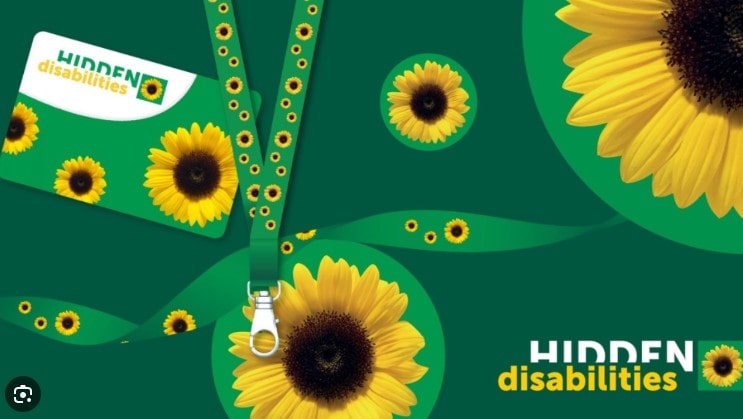
In this episode, I spoke to Paul White, CEO of the Hidden Disabilities Sunflower programme, about how a simple green lanyard with yellow sunflowers became a global symbol of understanding and inclusion.
It’s a conversation about hidden disabilities, kindness, confidence and why feeling seen can make such a difference.
What is the Sunflower lanyard?
The Sunflower lanyard was first introduced at Gatwick Airport in 2016.
The aim was simple: to give people with non-visible disabilities a discreet way of showing that they may need additional support, understanding or patience.
What began in one airport has grown into a worldwide movement. Today, the Hidden Disabilities Sunflower programme is recognised in airports, shops, sports venues, workplaces and public services across more than 90 countries.
The idea behind it is not to identify a specific condition.
It’s simply a way of saying:
“I may need a little extra support.”
Living with Type 1 Diabetes and hidden disability
Many people don’t immediately think of Type 1 diabetes as a hidden disability.
After all, continuous glucose monitors, insulin pumps and other technology are more visible than ever.
But the reality is that much of living with Type 1 diabetes remains invisible.
People don’t see:
- the blood glucose calculations
- the insulin dosing decisions
- the constant monitoring
- the worry about hypos
- the planning required before travelling
- the mental load of managing a condition that never switches off
To somebody looking in from the outside, you may appear perfectly fine.
That can sometimes make it difficult to explain why you need support.
Why the Sunflower helps
As a person who has lived with Type 1 diabetes for 50 years, I’ve used the Sunflower myself, particularly when travelling.
Airports can be stressful environments for anyone. For someone managing Type 1, there can be additional concerns:
- carrying insulin and medical supplies
- wearing devices that can’t be removed
- needing access to medication
- dealing with changing routines and meal times
- managing blood glucose while travelling
What I like about the Sunflower is that it opens a door.
Rather than having to start every conversation from scratch, it provides a signal that additional understanding may be needed.
In many situations, people simply ask:
“How can I help?”
And that can change the whole experience.
The power of being understood
One of the most moving moments in my conversation with Paul was hearing the story of another Paul, a man diagnosed with early-onset dementia.
Before discovering the Sunflower programme, he relied heavily on others to help him travel independently.
After a local bus operator adopted the programme, he felt confident enough to make journeys by himself once again.
He later wrote to Paul White and said:
“You’ve given me my life back.”
It’s a powerful reminder that accessibility isn’t always about major changes.
Sometimes it’s about creating confidence.
Sometimes it’s about reducing anxiety.
Sometimes it’s simply about knowing someone will understand if you need help.
More than a lanyard
One of the things I found fascinating during our conversation was how the programme has evolved.
Today, many organisations don’t just use the Sunflower to support customers and visitors.
They’re also using it in workplaces.
That matters because many employees are managing invisible conditions every day.
Whether that’s:
- Type 1 diabetes
- autism
- ADHD
- anxiety
- chronic illnesses
- neurological conditions
people often struggle with whether to disclose what they’re dealing with.
The Sunflower can help start those conversations.
It helps create workplace cultures where people feel more comfortable asking for reasonable adjustments and support.
Not all disabilities are visible
Paul shared a statistic that really stayed with me:
Around 80% of disabilities are not visible.
That means many of the people we meet every day may be dealing with challenges that aren’t immediately obvious.
As someone living with Type 1 diabetes, that idea resonates strongly.
People often see me getting on with life.
What they don’t see is the constant decision-making that sits behind it.
The same is true for many hidden disabilities.
Which is why kindness matters.
What Type 1 Diabetes can teach us about inclusion
One of the themes that comes up repeatedly on The Long View is the value of understanding.
When people understand what Type 1 diabetes involves, they are usually incredibly supportive.
The challenge is often awareness rather than willingness.
That’s why programmes like the Sunflower are so important.
They make invisible challenges easier to recognise.
They help conversations happen.
And they remind us not to make assumptions about what somebody else might be experiencing.
A final thought
Paul told me something that perfectly sums up the philosophy behind the Hidden Disabilities Sunflower programme:
“Most people want to be kind.”
I think he’s right.
The challenge isn’t kindness.
The challenge is knowing when someone needs it.
Whether you’re living with Type 1 diabetes, supporting someone who is, or managing another hidden disability entirely, feeling understood can make a huge difference.
And sometimes, something as simple as a sunflower can help make that happen.
You can find out more about the Sunflower programme at: www.hdsunflower.com.
You can listen to the full episode of The Long View – Living with Type 1 Diabetes wherever you get your podcasts.
It’s here on Spotify: Ep 13 – Paul White: The Sunflower lanyard, kindness and Type 1 Diabetes • The Long View – Living with Type 1 Diabetes
And here on Apple:
If you’re looking for honest conversations about living with Type 1 diabetes, inspiring guests and real-life experiences, The Long View has become a trusted resource for listeners across the Type 1 community.
Real stories, real people, real life with Type 1 Diabetes.